How Long Does It Take to Build Muscle?
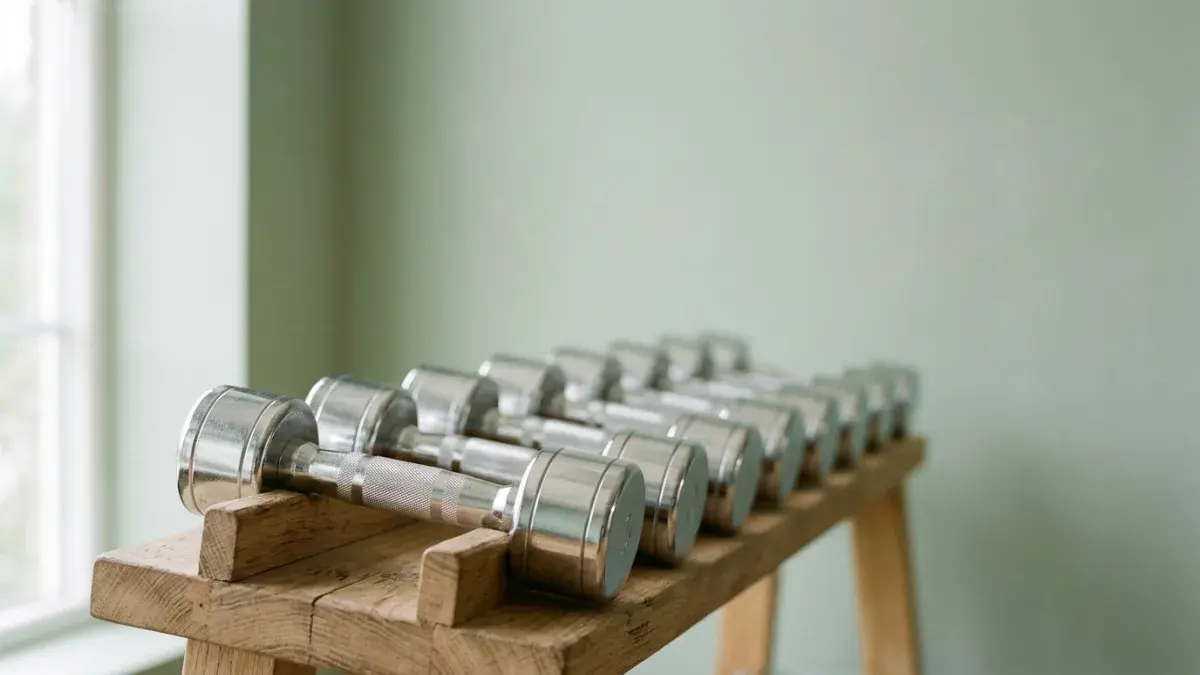
Measurable muscle growth takes about 8 to 12 weeks of consistent training. Change other people notice usually takes 3 to 6 months. The catch is that the first few weeks feel like the fastest progress you will ever make and are mostly not muscle: early strength gains come from your nervous system learning the movement, and early size changes are largely swelling from muscle damage plus water and glycogen drawn into the tissue. Real hypertrophy starts accumulating underneath that, and only becomes measurable once the early swelling settles.
That gap between how progress feels and what is actually happening is why so many people quit around week four, exactly when the real process is beginning. Below is the honest timeline, what drives the rate, and why the mirror lies early on.
The First Three Weeks Are Not Muscle
Damas and colleagues tracked muscle protein synthesis alongside actual hypertrophy through the first weeks of training and found that early synthesis is directed at repairing damage, not building new tissue — the two only start corresponding once the damage response attenuates (Journal of Physiology 2016, PMID 27219125). Studies measuring muscle thickness very early therefore tend to overstate growth: the muscle is swollen, not bigger.
Even research designed to catch hypertrophy as early as possible finds it takes weeks of high-intensity work before architectural change is detectable (Seynnes and colleagues, PMID 17053104). Meanwhile your strength climbs quickly, because you are getting better at recruiting and coordinating the muscle you already have. Strength and size are related, but early on they move for different reasons.
A Realistic Timeline
| Timeframe | What is actually happening | What you notice |
|---|---|---|
| Weeks 1–3 | Neural adaptation; damage repair; water and glycogen | Strength climbing fast, muscles feel fuller, soreness |
| Weeks 4–8 | Hypertrophy begins accumulating; swelling subsides | Often feels like a stall — the discouraging phase |
| Weeks 8–12 | Measurable growth | Clothes fit differently; tape and scale move |
| Months 3–6 | Growth compounds | Other people start commenting |
| Year 1+ | Rate slows substantially | Progress requires deliberate programming |
How Much, Per Month
A well-trained, well-fed beginner can realistically add roughly 1–2 lb of muscle per month, with women averaging around half that, and the rate falls considerably after the first year. A widely used rough guide puts lifetime natural gain for men at roughly 20–25 lb in year one, about half that in year two, half again in year three, and a few pounds a year thereafter.
Those monthly and yearly figures are practitioner estimates that have held up well in practice, not outputs of a controlled trial. Use them to calibrate expectations, not as a prediction for any individual.
What Sets the Pace
- Training age. The single biggest factor. Beginners gain several times faster than experienced lifters, and nothing recovers that advantage once it is spent.
- Progressive overload. The stimulus has to keep increasing. See progressive overload for beginners vs intermediates.
- Weekly volume. There is a clear dose-response — more weekly sets produce more growth, up to a point (Schoenfeld 2017, PMID 27433992).
- Protein and calories. Protein supplementation meaningfully augments resistance-training gains (Morton 2018, PMID 28698222). Targets in how much protein you need to build muscle.
- Sleep and recovery. Muscle is built during rest, not during the session — see how many rest days you need.
- Consistency. Twelve merely-adequate weeks beat four excellent weeks followed by eight missed ones. The adaptation is cumulative.
Two Things That Distort the Timeline
Fat loss makes muscle visible faster than muscle growth does. Someone with more body fat can look substantially different at 12 weeks having added only a few pounds of tissue, because the change is mostly the layer over the muscle thinning. If being noticed is the goal, body composition beats mass — see body recomposition timelines.
Soreness is not a progress meter. It reflects unaccustomed stress, and it fades as you adapt — which is a sign of adaptation, not of stalling. See does soreness mean growth.
Sources and Methodology
Early-phase protein synthesis and damage: Damas F et al., Journal of Physiology 2016 (PMID 27219125). Early hypertrophy detectability: Seynnes OR et al., Journal of Applied Physiology 2007 (PMID 17053104). Volume dose-response: Schoenfeld BJ et al., Journal of Sports Sciences 2017 (PMID 27433992). Protein supplementation: Morton RW et al., British Journal of Sports Medicine 2018 (PMID 28698222). Monthly and annual gain figures are practitioner estimates, flagged as such above. General information for healthy adults, not medical advice. Last updated July 29, 2026.
Frequently Asked Questions
Set the Calorie and Protein Targets First
The timeline above assumes you are actually eating for it. Enter your stats to get evidence-based maintenance calories and a daily protein target in seconds. Free and instant.
Open TDEE Calculator →