Does Muscle Soreness Mean Muscle Growth?
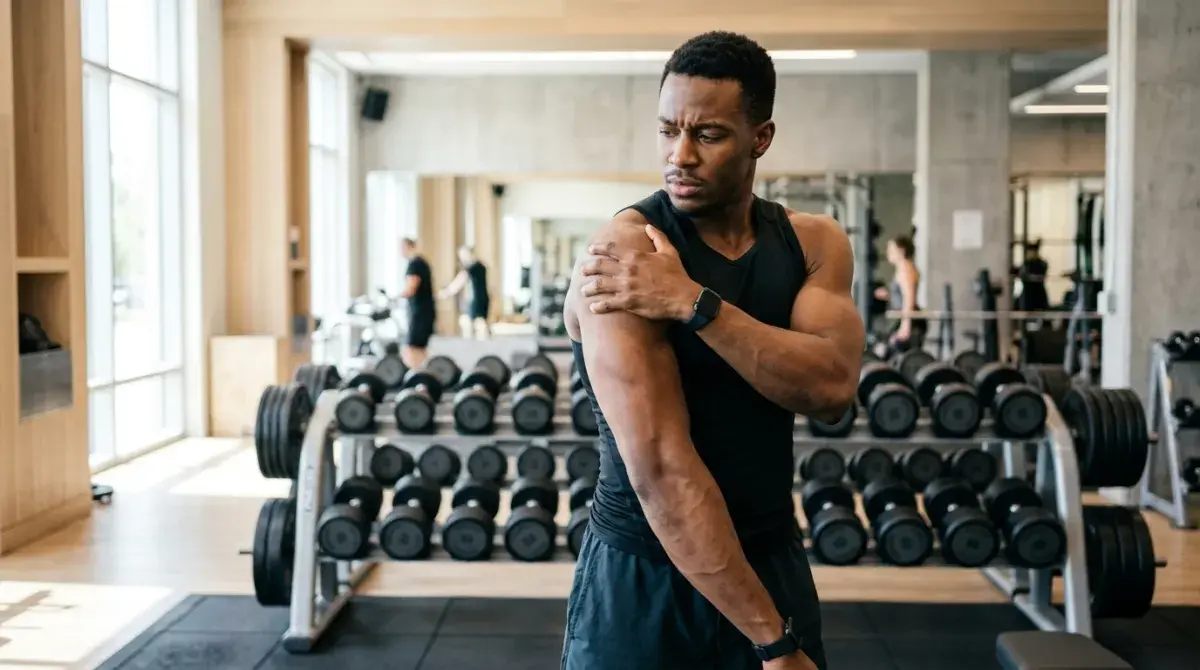
No — muscle soreness does not mean muscle growth. Delayed onset muscle soreness (DOMS) signals that a muscle did something unfamiliar and sustained minor damage; it is not a measure of hypertrophy. You can build muscle without getting sore, and you can be crushingly sore from a novel workout that builds very little. The "no pain, no gain" instinct is one of the most durable myths in training, and chasing soreness can actually work against progress. Here is what the research shows soreness really is, why it stops correlating with results, and what to track instead.
What the Evidence Actually Shows
The cleanest test of the soreness-equals-growth idea came from a 2016 study by Damas and colleagues (The Journal of Physiology, PMID 27219125). They tracked untrained lifters over 10 weeks and measured muscle damage, muscle protein synthesis, and actual muscle growth. Early on, when soreness and damage were highest, the elevated protein synthesis was directed at repairing the damage rather than building new muscle — and it did not predict later growth. Only after the first few weeks, once the damage response calmed down, did muscle protein synthesis start tracking real hypertrophy. In other words, the soreness of those first workouts was a repair signal, not a growth signal.
A study aptly titled "Muscle damage and muscle remodeling: no pain, no gain?" (Flann and colleagues, 2011, Journal of Experimental Biology, PMID 21270317) pushed the point further. It compared a group eased into training with a group that started at full intensity. Both groups gained a similar amount of muscle, but the gently-introduced group experienced far less muscle damage and soreness along the way. Growth happened with or without the pain — the pain was optional.
So What Is DOMS?
Delayed onset muscle soreness is the stiff, tender feeling that shows up 24 to 72 hours after a workout, especially a new one. It comes from microscopic tears in muscle fibers and connective tissue — driven mostly by eccentric (lengthening) contractions like the lowering phase of a squat or downhill running — followed by an inflammatory repair response. A widely cited review (Cheung and colleagues, 2003, Sports Medicine, PMID 12617692) laid out this mechanism and dismantled the persistent lactic-acid explanation: lactate clears from the blood within about an hour of exercise, long before DOMS ever peaks. Soreness is a response to unfamiliar mechanical stress, which is exactly why it fades as a workout becomes routine.
Why Soreness Fades but Growth Continues
The reason soreness is such a poor progress gauge is the repeated-bout effect: after your muscles have seen an exercise a few times, they adapt and the same session produces dramatically less soreness. A beginner's first leg day can leave them limping for days; three weeks later the identical workout barely registers — yet that is precisely when they are adding strength and muscle most efficiently. If you used soreness as your scorecard, you would wrongly conclude the workout stopped working right when it started working best.
This is also why more advanced lifters rarely get very sore from their regular training. Their bodies are adapted. Getting sore again usually just means they changed something — a new exercise, more volume, a longer range of motion — not that they finally did a "real" workout. Soreness measures novelty, not effectiveness.
What to Track Instead
If soreness will not tell you whether you are growing, the reliable signal is progressive overload — steadily doing more over time, whether that is more weight on the bar, more reps at a given weight, or more quality sets per week. That, not next-day tenderness, is the mechanical driver of hypertrophy.
| Signal | What it tells you | Useful for judging growth? |
|---|---|---|
| Post-workout soreness (DOMS) | The workout was unfamiliar or eccentric-heavy | No — measures novelty, not results |
| Progressive overload | You are adding weight, reps, or sets over weeks | Yes — the primary driver |
| Strength trend | Your working loads are climbing | Yes — strong proxy for muscle gain |
| Tape & body-composition trend | Circumference and lean mass over months | Yes — the direct outcome |
| The "pump" during a set | Transient blood flow to the muscle | Weakly — a feel-good cue, not a measure |
To make progression concrete, estimate your training loads with the one-rep max calculator, and make sure the nutrition side is handled — muscle growth needs both a training stimulus and enough protein to build muscle, which you can dial in with the protein calculator or map out with the muscle gain calculator.
Should You Ever Chase Soreness?
No. Deliberately hunting for soreness usually means adding excessive novelty or eccentric damage, which increases recovery time without adding growth — and can cut into the frequency and quality of your future sessions. If anything, managing soreness so it does not sabotage your next workout is the smarter play. That is where recovery tools come in: adequate rest between sets and sessions, sleep, and protein do more for long-term muscle than any amount of next-day pain. Just note that aggressive anti-inflammatory measures — including the cold plunge — can slightly blunt the muscle-building adaptation, so use them when soreness relief matters more than maximal gains.
The Bottom Line
Soreness tells you a workout was new to your body, not that it grew your muscles. Beginners get sore because everything is unfamiliar; trained lifters rarely do, and both can build muscle steadily. Stop using the mirror-of-pain as your scorecard and judge your training by whether the numbers are moving — more weight, more reps, more measured muscle over the weeks and months. Grow through progression, not punishment.
Consistent training is a long game, and so is everything else worth building — some readers keep the same patient, compounding mindset for their finances using the paycheck and budgeting tools at pay.thicket.sh.
Frequently Asked Questions
Track Real Progress, Not Soreness
Estimate your strength ceiling and set a protein target so your training and nutrition actually drive muscle growth — no next-day pain required.