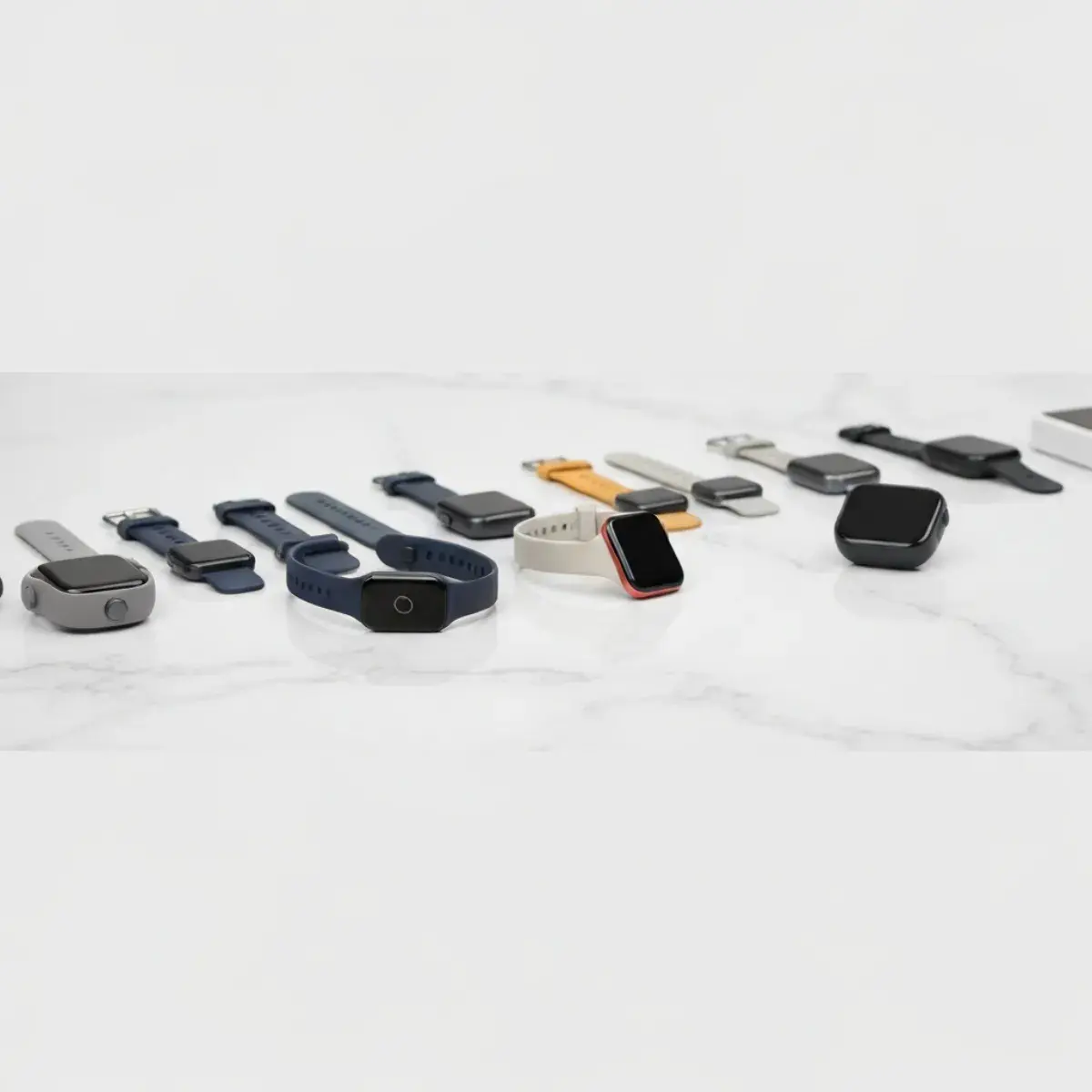
We compared 8 fitness trackers and smartwatches on heart rate accuracy, GPS performance, battery life, and value. Here are the standouts for every use case.
For the peer-reviewed validation studies behind the picks (the JAMA Cardiology heart-rate paper, the Stanford calorie-accuracy study, the Oura sleep-PSG comparison), read the evidence-tested 2026 fitness tracker review.
How We Tested
We evaluated each tracker on heart rate accuracy (compared against a chest strap during runs, cycling, and strength training), GPS accuracy (mapped routes compared to known distances), battery life (real-world use, not manufacturer claims), app quality, and value for money.
Tracker
Best For
Battery
Price
Rating
Apple Watch Series 10
Best Overall
18 hrs
$399
4.7/5
Garmin Venu 4
Best for Runners
5 days
$449
4.6/5
Fitbit Charge 6
Best Budget
7 days
$150
4.4/5
Whoop 4.0
Best for Athletes
4-5 days
$239
4.3/5
Garmin Forerunner 265
Best GPS Watch
13 days
$350
4.7/5
Samsung Galaxy Watch 7
Best for Android
40 hrs
$300
4.4/5
Fitbit Inspire 3
Best Entry Level
10 days
$80-100
4.2/5
Oura Ring Gen 3
Best for Sleep
7 days
$299
4.3/5
Best Overall#1
Apple Watch Series 10
4.7
The Apple Watch Series 10 remains the most complete fitness tracker if you own an iPhone. The new S10 chip improves workout detection accuracy, and the thinner case is noticeably more comfortable for sleep tracking.
Garmin dominates endurance sports tracking. The Venu 4 gives you multi-band GPS that holds signal in urban canyons, plus Training Readiness and Morning Report features that tell you exactly how hard to push today.
At $150, the Charge 6 delivers 90% of what most people need: accurate step counting, heart rate monitoring, built-in GPS, sleep tracking, and a 7-day battery. The Google integration adds Maps and Wallet.
Whoop is purpose-built for recovery optimization. The strain/recovery/sleep model gives serious athletes a daily playbook. If you train 5+ days per week and want data-driven recovery guidance, nothing else comes close.
The Forerunner 265 is the sweet spot between Garmin's running features and everyday smartwatch usability. The 13-day battery and race predictor make it the top pick for marathon and half-marathon runners.
Battery13 days (GPS: 20 hrs)
Display1.3" AMOLED
Water5 ATM (50m)
Price$350
Multi-band GPSRace predictorTraining statusDaily suggested workoutsMusic storageConnect IQ apps
Pros
13-day battery in smartwatch mode
Multi-band GPS with SatIQ
Training Readiness + race predictor
AMOLED display with great outdoor visibility
Cons
Bulkier than a fitness band
Music storage only (no streaming)
Runner-focused features may overwhelm casual users
The Galaxy Watch 7 is the Apple Watch equivalent for Android users, with a unique body composition sensor that estimates muscle mass and body fat percentage through bioelectrical impedance.
For someone who just wants step counting, basic heart rate, and sleep tracking without spending a fortune, the Inspire 3 nails the fundamentals. At under $100, it is the easiest way to start tracking.
Battery10 days
DisplayColor AMOLED
Water5 ATM (50m)
Price$80-100
Heart rateSleep stagesSpO2Stress tracking20+ exercise modesReminders to move
If sleep quality is your top priority, the Oura Ring outperforms every wrist-based tracker. The ring form factor captures skin temperature and HRV more precisely because of constant skin contact on the finger.
Body Fat Calculator — compare your tracker's body composition reading against the Navy method
BMR Calculator — understand your resting metabolism, the base your tracker builds on
Affiliate Disclosure: CalcFit earns a commission on qualifying Amazon purchases made through links on this page. This does not affect our rankings or recommendations. All trackers were evaluated independently.
Last updated: March 2026. We re-evaluate our picks quarterly.
Frequently Asked Questions
If your primary goal is health and workout tracking, a dedicated fitness tracker (Fitbit Charge 6, Whoop) offers better battery life and focused features at a lower price. If you also want notifications, apps, and phone-like features, a smartwatch (Apple Watch, Galaxy Watch, Garmin Venu) is the better choice. Most people are happiest with a mid-range smartwatch that does both.
Wrist-based trackers typically overestimate calories burned by 20-40%, according to a Stanford University study. Heart rate-based estimates are more accurate than step-based estimates. Use your tracker's calorie reading as a relative guide (comparing day to day) rather than an absolute number. For precise calorie targets, use our TDEE Calculator as a baseline.
Whoop costs $199-359/year on top of the band price. It's worth it if you train 5+ days per week and will actually use the recovery data to modify your training. For casual exercisers, a Fitbit Charge 6 at $150 with no subscription delivers better overall value. Whoop's strength is its coaching algorithm, not hardware.
Garmin Forerunner 265 leads with 13 days in smartwatch mode. Fitbit Inspire 3 gets 10 days. Fitbit Charge 6 and Oura Ring get 7 days. Apple Watch lasts 18-36 hours. If battery life is your top priority, Garmin wins across the board.
Some trackers offer FDA-cleared ECG (Apple Watch, Samsung Galaxy Watch) that can detect atrial fibrillation. Blood oxygen monitoring can flag potential sleep apnea. However, fitness trackers are wellness devices, not medical devices. Abnormal readings should be discussed with a doctor, not self-diagnosed.