Find your optimal daily protein intake based on your body weight, activity level, and fitness goal.
Frequently Asked Questions
The RDA minimum is 0.36g per pound (0.8g/kg) of body weight. However, active individuals and those looking to build muscle should aim for 0.7-1.0g per pound (1.6-2.2g/kg). During a caloric deficit, even higher protein (up to 1.2g/lb) can help preserve muscle mass.
For healthy individuals with normal kidney function, high protein intake (up to 2g/lb or 4.4g/kg) has not been shown to cause kidney damage. However, extremely high protein diets may displace other important nutrients. Spreading protein across 3-5 meals per day optimizes muscle protein synthesis.
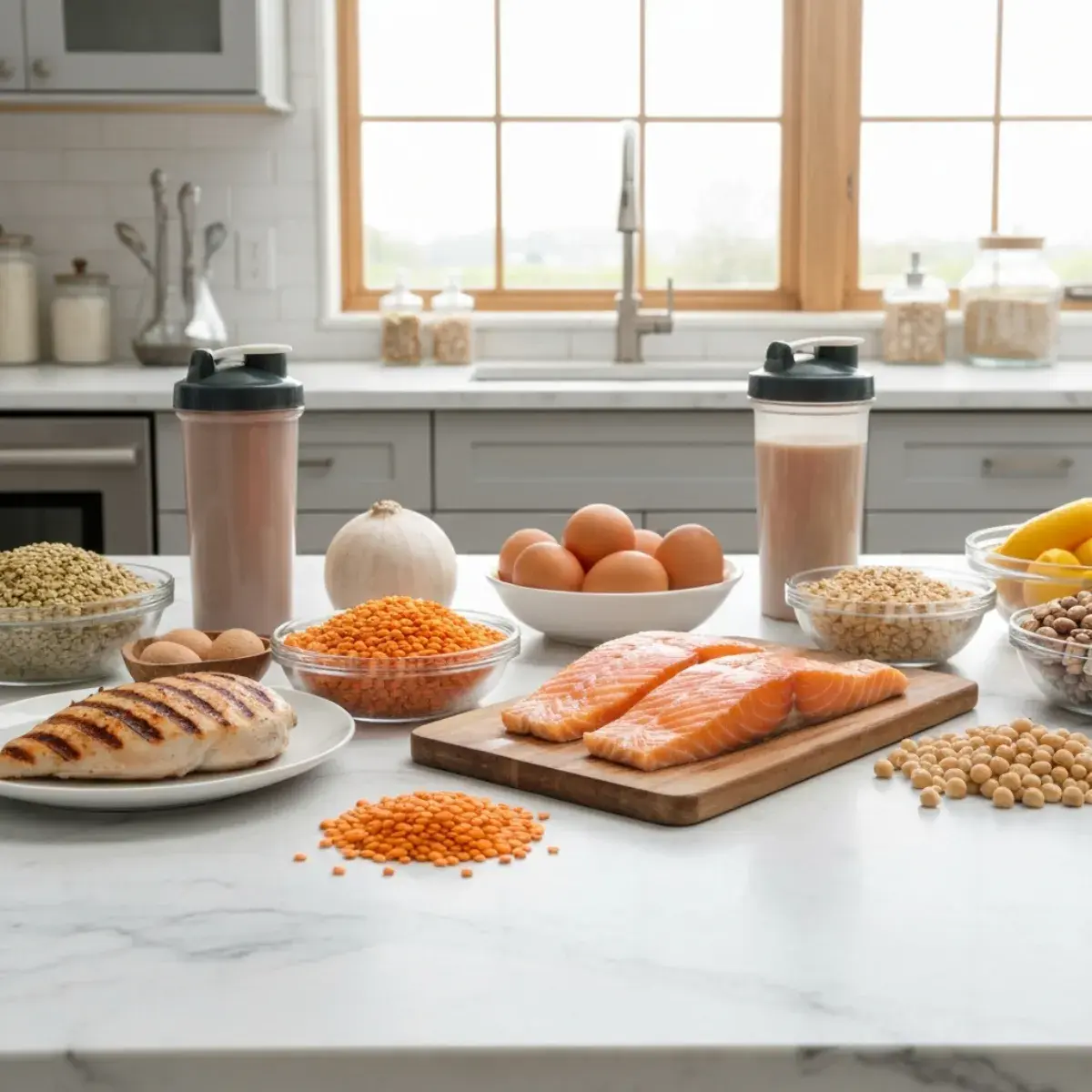
Complete protein sources include chicken breast, turkey, fish, eggs, dairy (Greek yogurt, cottage cheese, whey protein), and lean beef. Plant-based complete proteins include soy, quinoa, and buckwheat. Combining legumes with grains also creates complete proteins.
Total daily protein intake is more important than timing. That said, consuming 20-40g of protein per meal, evenly distributed throughout the day, optimizes muscle protein synthesis. A post-workout protein meal within 2 hours can be beneficial but is not as critical as once believed.
Protein recommendations are actually higher during weight loss (1.0-1.2g/lb) than during a caloric surplus (0.7-1.0g/lb). During a deficit, extra protein helps preserve lean muscle mass while losing fat. During a surplus, moderate protein is sufficient since the caloric surplus itself is anabolic.