Body Recomp Diet Plan: A 7-Day Sample with Real Macros (2026)
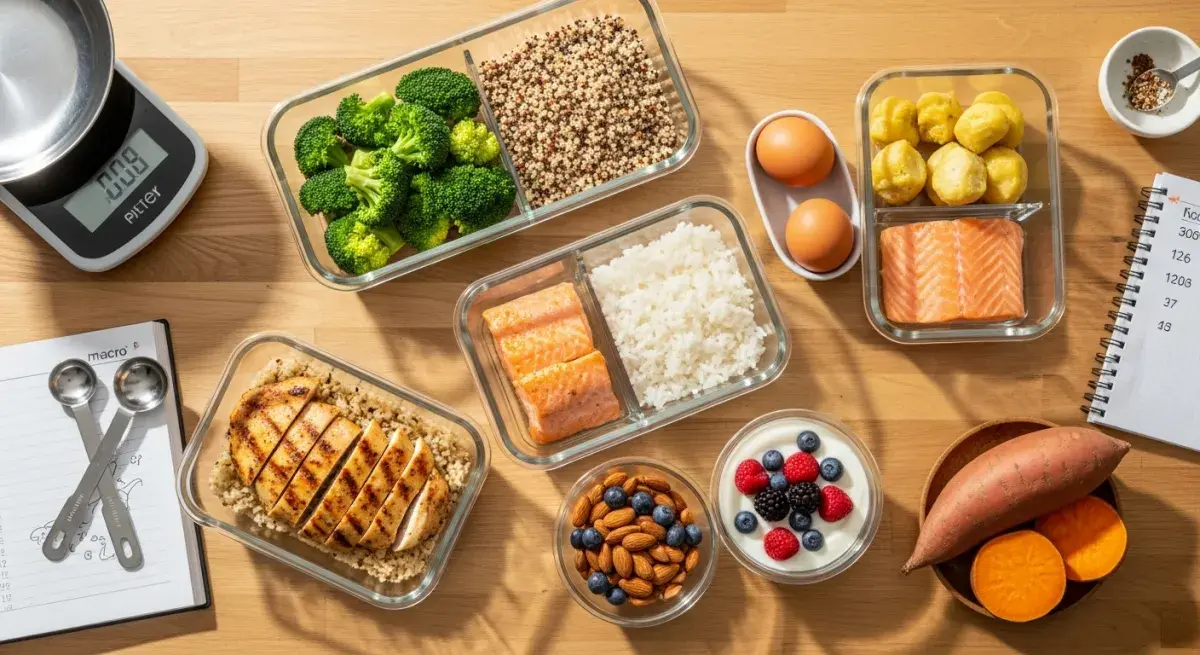
A body recomp diet plan only works when the daily macros line up with the calorie target and the per-meal protein hits a high enough dose to drive muscle protein synthesis. This article gives a concrete 7-day sample for a 70 kg lifter targeting recomp at 2,200 kcal — with training-day and rest-day variants, swaps for vegetarians and vegans, and a grocery list at the end. The underlying macros come from the body recomp calculator; the calculation logic sits in the body recomp calculator how-to guide.
The Macro Target This Plan Is Built On
The sample lifter: 70 kg male, 18% body fat (57.4 kg lean mass), intermediate training age, 4 resistance sessions per week, maintenance ~2,500 kcal. A 12% deficit puts the target at 2,200 kcal/day. Protein at 2.4 g/kg lean = 138 g. With protein locked, the remaining 1,648 kcal split 50/50 between carbs and fat by remainder: 240 g carbs and ~68 g fat. The macro framework lines up with Helms et al. 2014 (PMID 24092765) and Morton et al. 2018 (PMID 28698222); the protein distribution follows the 0.4 g/kg per-meal anabolic threshold from Schoenfeld & Aragon 2018.
| Target | Calories | Protein | Carbs | Fat |
|---|---|---|---|---|
| Training day | 2,250 kcal | 138 g | 270 g | 55 g |
| Rest day | 2,150 kcal | 138 g | 215 g | 78 g |
| Weekly average (4 train / 3 rest) | 2,200 kcal | 138 g | 247 g | 65 g |
If your numbers differ, run them through the body recomp calculator and scale the meal sizes proportionally. The portion logic is the same; the absolute grams shift.
Day 1 (Training Day): Lower-Body Compound Day
Breakfast (7:00 AM). 3 whole eggs + 2 egg whites scrambled with spinach, 1 slice whole-grain toast, 1 cup blueberries. ~470 kcal, 35 g protein, 45 g carbs, 17 g fat.
Snack (10:00 AM). 1 cup non-fat Greek yogurt with 30 g granola, 1 tbsp honey. ~290 kcal, 23 g protein, 40 g carbs, 4 g fat.
Pre-training meal (12:30 PM). 150 g grilled chicken breast, 1.5 cups cooked white rice, 1 cup steamed broccoli, 1 tsp olive oil. ~580 kcal, 42 g protein, 70 g carbs, 9 g fat.
Post-training shake (4:30 PM). 30 g whey protein in water, 1 medium banana. ~225 kcal, 25 g protein, 28 g carbs, 2 g fat.
Dinner (7:00 PM). 170 g grilled salmon, 1 cup quinoa, 1.5 cups mixed roasted vegetables, 1 tbsp olive oil. ~680 kcal, 38 g protein, 60 g carbs, 28 g fat.
Day 1 totals: ~2,245 kcal, 163 g protein, 243 g carbs, 60 g fat. Slight protein overshoot is fine — undershooting is the bigger risk.
Day 2 (Rest Day): Active Recovery
Breakfast. Overnight oats: 60 g rolled oats, 250 ml unsweetened almond milk, 20 g whey protein, 1 tbsp peanut butter, 1/2 banana. ~470 kcal, 30 g protein, 55 g carbs, 13 g fat.
Snack. 1 medium apple + 30 g almonds. ~260 kcal, 7 g protein, 28 g carbs, 17 g fat.
Lunch. Chicken-and-quinoa salad: 130 g grilled chicken, 3/4 cup cooked quinoa, mixed greens, 1/2 avocado, 1 tbsp olive oil + lemon dressing. ~580 kcal, 38 g protein, 35 g carbs, 30 g fat.
Snack. 200 g cottage cheese (1% milkfat) with cucumber and pepper. ~180 kcal, 27 g protein, 8 g carbs, 4 g fat.
Dinner. 180 g grilled flank steak (lean), 1 medium sweet potato, 2 cups roasted Brussels sprouts, 1 tsp olive oil. ~620 kcal, 42 g protein, 50 g carbs, 25 g fat.
Day 2 totals: ~2,110 kcal, 144 g protein, 176 g carbs, 89 g fat. Higher fat, lower carbs — the classic rest-day periodization. Adjust portions if your daily numbers run higher.
Days 3-7: The Pattern Repeats with Swaps
The principle behind the rest of the week: rotate the protein source (chicken → turkey, salmon → cod, beef → lean pork), rotate the carb source (white rice → jasmine rice → sweet potato → oats), and keep the vegetable variety high. The macros stay within 5% of the daily target. A simplified rotation:
| Day | Type | Main protein | Main carb |
|---|---|---|---|
| 1 | Training | Chicken / salmon | White rice / quinoa |
| 2 | Rest | Chicken / lean steak | Quinoa / sweet potato |
| 3 | Training | Turkey / cod | Jasmine rice / oats |
| 4 | Rest | Salmon / lean pork | Sweet potato / quinoa |
| 5 | Training | Chicken / shrimp | White rice / corn tortillas |
| 6 | Training | Lean ground beef / cod | Pasta (whole grain) / quinoa |
| 7 | Rest | Chicken / eggs | Oats / sweet potato |
Vegetarian and Vegan Swaps
The protein math is harder without animal sources because plant proteins are less digestible (lower PDCAAS / DIAAS scores) and lower in leucine. Push the daily target to the upper end of the recomp range (2.6 g/kg lean = 149 g for the sample lifter) to compensate.
- Chicken/turkey/beef → 200 g extra-firm tofu (about 28 g protein), 150 g tempeh (29 g), 150 g seitan (45 g), or 1 cup cooked lentils (18 g).
- Salmon/cod/shrimp → 1.5 cups edamame (32 g) or 200 g tempeh with sesame.
- Eggs → 200 g silken tofu scramble + nutritional yeast (24 g) or 30 g pea protein in a smoothie.
- Greek yogurt → soy yogurt or 30 g pea protein shake with almond milk.
- Cottage cheese → 200 g firm tofu + nutritional yeast or a high-protein soy alternative.
Vegans should add a 20-30 g pea or soy protein shake to at least one meal daily to make hitting the elevated target realistic. See our protein per meal article for the dose-response math on per-meal protein.
Grocery List for a 7-Day Cycle
- Protein: 1.2 kg chicken breast, 800 g salmon fillet, 500 g lean steak, 500 g turkey breast, 12 eggs, 500 g cod fillet, 1 kg low-fat Greek yogurt, 500 g 1% cottage cheese, 1 kg whey protein powder (lasts ~3 weeks).
- Carbs: 1 kg quinoa, 1 kg jasmine rice, 500 g rolled oats, 4 sweet potatoes, 1 loaf whole-grain bread, 500 g whole-grain pasta, 1 bag corn tortillas.
- Fats: 1 bottle olive oil, 250 g almonds, 200 g peanut butter, 4 avocados.
- Vegetables/fruit: 1 kg broccoli, 1 kg Brussels sprouts, 1 kg mixed greens, 1 kg mixed roasted veg (peppers, zucchini, carrots), 1 kg blueberries (fresh or frozen), 6 bananas, 4 apples, 1 cucumber.
- Other: garlic, lemons, honey, dried herbs, salt, pepper.
Approximate weekly cost in 2026 US averages: $85-110 for the lifter above (USDA Food Plan moderate-cost male reference). High-protein eating runs $5-8/day more than carb-heavy eating. For freelancers and contractors who run hourly businesses, factor this into your minimum hourly rate — the freelance hourly rate calculator at pay.thicket.sh handles the food/expense math against your target take-home, which often surfaces an under-priced rate.
Adjusting the Plan for Your Numbers
Scale meal sizes by the ratio of your daily target to 2,200 kcal. A 1,800 kcal target = 0.82× portions; a 2,700 kcal target = 1.23× portions. Protein scales independently with lean mass — recompute from the body recomp calculator. Larger lifters (above 90 kg) should split protein into 5 meals of ~35 g rather than 4 meals of ~40 g. Smaller lifters (below 60 kg) can stay on 4 meals of 25-30 g.
The 2-week recalibration loop applies: track 7-day morning weight average, waist circumference, and a heavy 5-rep compound. Adjust calories by ±100-150 kcal/day if any signal drifts off the recomp target. The detailed feedback loop sits in the how to use the body recomp calculator guide.
The Bottom Line
A recomp diet plan needs three structural elements: a 10-15% deficit averaged across the week, 2.2-2.6 g/kg lean protein hit daily across 4-5 meals, and a training-day vs rest-day carb-fat shift if you can be bothered to periodize. The 7-day sample above gives a concrete template for a 70 kg lifter at 2,200 kcal; scale and substitute for your numbers and preferences.
Run your macros through the body recomp calculator to lock in your targets, then build the week around them. The macros calculator handles the per-meal protein dose distribution, and the TDEE calculator sets your maintenance baseline before the deficit.
Frequently Asked Questions
Build Your Recomp Diet Around Real Macros
Run your numbers through the body recomp calculator and use the sample plan as a template for your week.