RPE vs RIR — How Lifters Actually Calibrate Effort (Evidence Review)
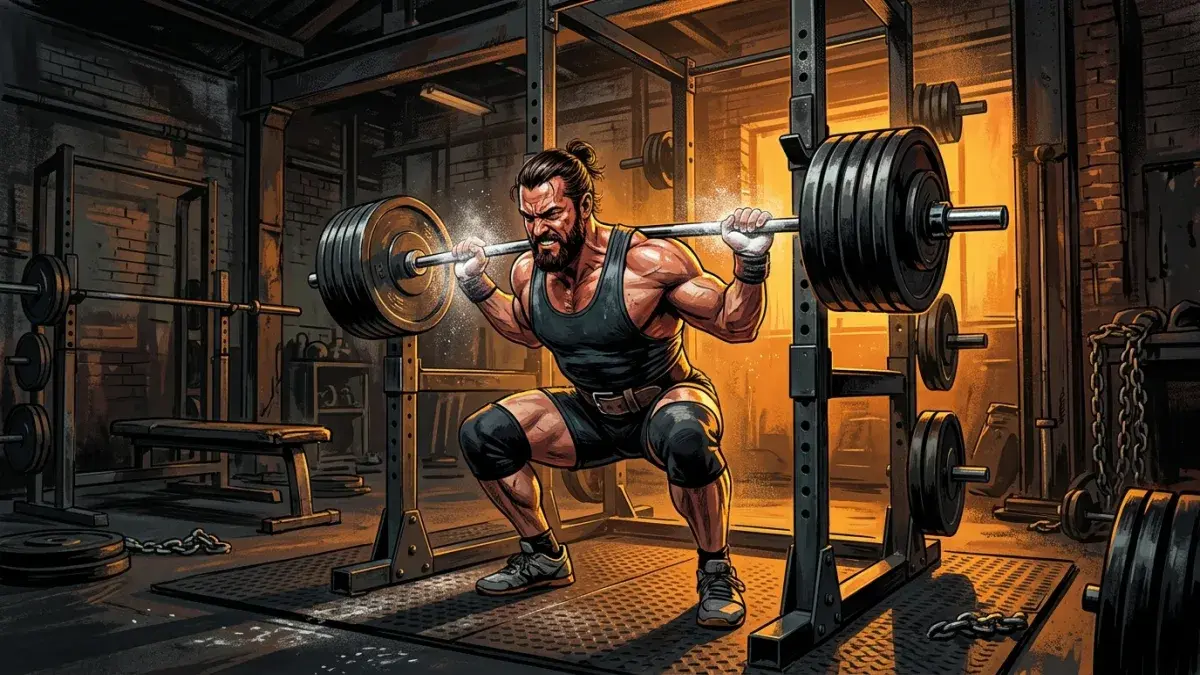
Walk into any serious lifting gym in 2026 and you will hear two acronyms more than any others: RPE (Rating of Perceived Exertion) and RIR (Reps in Reserve). They are the language of modern autoregulation — the reason one lifter progresses for years while another stalls after 18 months of percentage-based programs. Here is the research on how they work, how accurate they are, and how to use them without fooling yourself.
The 1-10 RPE Scale (Modified Borg, CR10)
The original Rating of Perceived Exertion was developed by Swedish psychologist Gunnar Borg in 1962 for cardiovascular research. His 6-20 scale mapped loosely onto heart rate (a 15 RPE = ~150 BPM). In the 1980s Borg introduced the CR10 — a 1-10 compression of the same idea — which has become the standard in strength training, largely through the work of Mike Tuchscherer (Reactive Training Systems) and Mike Zourdos.
The strength-specific version adopted across evidence-based coaching maps RPE directly to Reps in Reserve:
| RPE | RIR | What it feels like |
|---|---|---|
| 10 | 0 | Absolute failure. No more reps possible at any speed. |
| 9.5 | 0-1 | A failed attempt, or could grind out one more. |
| 9 | 1 | One rep left in the tank. |
| 8.5 | 1-2 | Definitely one, maybe two more reps. |
| 8 | 2 | Two reps left. Bar speed noticeably slows on the last rep. |
| 7 | 3 | Three reps left. Bar speed still reasonably snappy. |
| 6 | 4+ | Four or more. Feels like a warm-up weight. |
| 5 | 5+ | Easy. Typical first working set for beginners. |
This chart is sometimes called the “Tuchscherer” or “Zourdos” RPE chart. It is the one used in almost every modern powerlifting and hypertrophy program — Renaissance Periodization templates, Juggernaut AI, Stronger By Science, and the RTS system all use this exact mapping.
How Accurate Are Lifters at Judging RPE?
The big question: can lifters actually tell a 2-RIR set from a 3-RIR set? The landmark study is Zourdos et al., Journal of Strength and Conditioning Research, 2016 (PMID 26049792). Researchers had lifters perform bench press sets at 70% and 80% of 1RM to failure, asking them to call their RIR at the end.
Key findings from the Zourdos 2016 study:
- Experienced lifters estimated within ~1 rep of actual RIR on compound lifts.
- Novice lifters underestimated effort significantly — their “RPE 8” often turned out to be closer to RPE 6.
- Accuracy was better on heavier loads (80% 1RM) than moderate loads (70% 1RM).
- Accuracy was worse on high-rep sets (above 8 reps per set).
A 2021 meta-analysis by Halperin et al. in Sports Medicine (PMID 33811295) confirmed these findings across 12 studies: RPE accuracy is a trainable skill, plateauing after about 8-12 weeks of deliberate use. For intermediates and advanced lifters, RIR predictions cluster tightly (standard deviation < 1 rep). For true novices, RPE is essentially a coin flip until they have experienced real failure to calibrate against.
RPE vs Percentages: Which Is Better?
The strongest direct comparison is Helms et al., International Journal of Sports Physiology and Performance, 2018 (PMID 28530498). Two groups trained identical programs for 8 weeks — one prescribed in fixed percentages of 1RM, the other using RPE-targeted weights. The RPE group made slightly better strength gains (effect size was small but consistent), with the most benefit on days when lifters reported feeling off.
The mechanism is intuitive: a fixed percentage (say, 80% of your 1RM) is calibrated against your best day ever. On a bad day — poor sleep, high stress, undereaten — 80% might be RPE 9.5 and crush you. On a good day it might be RPE 7 and leave easy gains on the floor. RPE-based autoregulation lets the session adjust to daily readiness.
But RPE is not a free lunch: it requires calibration. If you cannot accurately judge RIR, prescribing “RPE 8” is just asking you to lift whatever weight feels hard, which is no program at all. Most coaches recommend a hybrid model: beginners train on percentages for 3-6 months, then gradually transition to RPE. The one-rep max calculator is useful for setting those initial percentage-based starting weights.
RPE for Hypertrophy vs Strength
The target RPE range differs depending on the goal.
Hypertrophy: RPE 7-9 works as well as failure
Grgic et al., Sports Medicine, 2021 (PMID 33475985) meta-analyzed 15 studies comparing training to failure vs stopping short. The result: no meaningful hypertrophy advantage for failure training. Sets taken to 1-3 RIR (RPE 7-9) produced equivalent growth with less fatigue, better session-to-session recovery, and lower injury risk. Schoenfeld and Grgic have consistently recommended keeping most hypertrophy work at RPE 7-9 with an occasional RPE 10 set on isolation movements where the downside is small.
Strength: RPE 8-9 for working sets, RPE 9-9.5 for top singles
For one-rep max development, the programming convention is heavier. Zourdos' Powerbuilding program, for example, typically prescribes: top single at RPE 8-9, then 2-4 back-off sets at RPE 7-8 in the 3-5 rep range. True failure (RPE 10) is reserved for testing days, not weekly training. Tuchscherer's RTS is similar — weekly progression from RPE 7 in week 1 up to RPE 9 in week 4, then deload. See our deload week guide for the evidence on why that final drop matters.
A 4-Week RPE Calibration Protocol
If you have never trained with RPE, here is how to calibrate in a month without rolling the dice on accuracy:
| Week | Working set target | What to learn |
|---|---|---|
| 1 | AMRAP at 70% 1RM, one set per lift | Count reps to actual failure. This is your RPE 10 anchor. |
| 2 | Stop at RPE 9 (1 RIR) — then do 1 more rep to verify | Train the 1-RIR feel. Verify: did you stop with exactly 1 left? |
| 3 | Working sets at RPE 8, top set at RPE 9 | Practice leaving 2 reps vs 1 rep. Feel the gap. |
| 4 | Full RPE-prescribed program (RPE 7-9 range) | Normal training. You now have calibration. |
By the end of week 4, most intermediates cluster within 1 rep of accuracy on compound lifts. Plug your refined 1RM estimates into the 1RM calculator to keep percentage-based backups in your program. For recovery-day cardio that pairs with heavy lifting, the heart rate zones calculator helps you stay in Zone 2 instead of bleeding into strength-eroding Zone 3 territory.
Common Mistakes with RPE and RIR
- Everything is RPE 8. The most common RPE pattern — especially on bench press — is lifters reporting RPE 8 for every working set regardless of actual bar speed. If you can do 4+ more reps, that is RPE 6, not 8.
- Treating RPE like percentages. RPE 8 is not a fixed weight. It is whatever weight feels like 2 reps in reserve that day. Lighter on bad days, heavier on good days.
- Ignoring bar speed. Velocity-based training research (Gonzalez-Badillo et al., 2017) showed that bar speed is a more objective measure of effort than subjective RPE. A simple proxy: if the concentric phase is obviously slower than your previous rep, you are near failure.
- Chasing RPE 10 on compound lifts. A missed squat or deadlift at true failure carries injury risk. Reserve failure work for isolation movements and the rare true test day.
- Never actually hitting failure. The opposite failure mode: lifters who stop at RPE 7 forever and never calibrate their ceiling. Occasional RPE 10 sets (on safe movements) are the only way to know what 1 RIR really feels like.
How RPE Connects to Nutrition and Recovery
Your RPE at a given weight is the integral of everything outside the gym: sleep, calories, protein intake, life stress. If your RPE creeps up week-over-week on the same loads, the answer is usually not more coffee — it is more food, more sleep, or a deload. The TDEE calculator is a reasonable starting point for calorie targets; our 2026 macros review covers protein targets for strength work specifically. And if you are tracking overall effort beyond the gym — work, family, financial stress — our friends at money.thicket.sh have tools that reduce one major source of bandwidth drain.
The Bottom Line
RPE and RIR are two ways of describing the same thing: how close you came to failure. The Tuchscherer 1-10 scale maps neatly to 0-4+ RIR, and evidence-based programs use it because it lets training adjust to daily readiness rather than locking you into percentages calibrated against your best day ever. Most working sets should live in the RPE 7-9 range. Accuracy improves with practice — so calibrate against occasional true failure sets, keep a log, and trust the data, not how you feel the morning after.
Ready to build a percentage-based backup for your RPE-based program? Start with the 1RM calculator, then check your daily calorie needs with the TDEE calculator.
Frequently Asked Questions
Set Your Working Weights in 10 Seconds
Enter a top set and reps. We estimate 1RM using Epley, Brzycki, and Lombardi formulas and give you the percentage chart.