Creatine HCl vs Monohydrate: 2026 Efficacy Review (RCT Evidence)
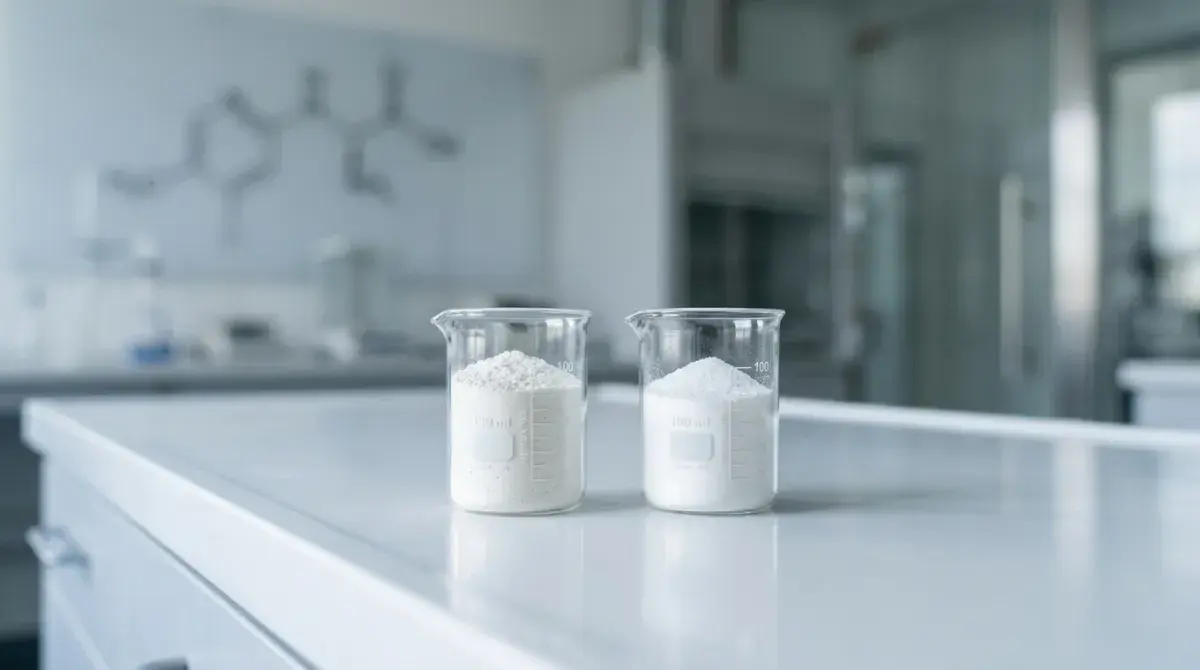
Walk into any supplement store in 2026 and you will be sold creatine HCl. The pitch is consistent across brands: better solubility, smaller effective dose, less bloating, faster absorption. The price tag is usually 4-10 times higher than monohydrate per gram. The marketing implies the price gap reflects an efficacy gap. The trial literature implies it does not.
This is an evidence review, not a marketing rebuttal. The relevant question is narrow: in head-to-head randomized controlled trials with hard endpoints — strength, body composition, muscle creatine saturation — does HCl outperform monohydrate? The current answer, as of mid-2026, is no. There is no published RCT in which creatine HCl produced statistically superior outcomes versus monohydrate at equivalent or even higher dosing. Below is what the trials actually measured, what the position stands say, where the solubility argument breaks down, and the narrow conditions under which HCl might still make sense for an individual user.
What Creatine HCl Actually Is
Creatine HCl (creatine hydrochloride) is creatine monohydrate bonded to hydrochloric acid in a 1:1 molar ratio. The bond raises in-vitro water solubility — Vireo Systems' US Patent 7,608,646 (filed 2009) reports a ~38-fold improvement over monohydrate in pH-neutral water. The patent forms the foundation of the entire HCl product category. Every retail HCl SKU you can buy today licenses or references that patent's claims.
Solubility is a real chemical property. The marketing inference — that better solubility means better bioavailability, which means more muscle creatine saturation, which means more strength gain — is a chain of assumptions that the bioavailability literature does not support. Once the dose enters the stomach, both forms are exposed to ~pH 1.5 HCl. Monohydrate is fully dissolved in stomach acid within minutes per Persky and Brazeau 2001 (PMID 11427691). The intestinal transporter (CRT/SLC6A8) does not distinguish HCl-derived creatine from monohydrate-derived creatine — it is transporting creatine. Bioavailability for creatine monohydrate at 3-5 g doses sits at roughly 95% per the same review. There is no meaningful absorption headroom for HCl to capture.
The Head-to-Head Trial: Jagim 2012
The most directly comparable head-to-head RCT is Jagim et al. 2012 in the Journal of the International Society of Sports Nutrition (PMID 22433362). The trial randomized 36 resistance-trained men into three groups: creatine HCl (1.5 g/day, plus placebo bulk), creatine monohydrate (5 g/day), or placebo. Loading was 5 days at a tripled maintenance dose, followed by maintenance for 4 weeks. Endpoints included bench press 1RM, leg press 1RM, total body water, fat-free mass, and muscle creatine via biopsy proxy.
Results: both creatine groups outperformed placebo on every endpoint with statistical significance. HCl and monohydrate did not significantly differ from each other on any measured outcome. Body composition changes, strength gains, and total body water shifts were comparable. The trial did not find an HCl advantage on GI complaints — both groups reported low and similar rates of stomach discomfort. The trial's headline conclusion, in the authors' own words: at the studied doses, HCl and monohydrate produced equivalent ergogenic effects.
Jagim 2012 is the closest thing to a definitive head-to-head trial published. The sample size is modest (n=36) and the duration is short (4 weeks), which limits statistical power to detect small differences. But the direction of the data is clear: at the dose that HCl marketing claims is sufficient (1.5-2 g), HCl is equivalent to monohydrate at 5 g, and there is no superiority signal in either direction. Subsequent trials (de França et al. 2015 on creatine ethyl ester and HCl absorption kinetics; smaller industry-funded comparisons) have produced the same general pattern: no published superiority signal for HCl on hard endpoints.
What the Position Stands Say
The 2017 ISSN position stand on creatine by Kreider et al. (PMID 28615996) is unambiguous: 'Creatine monohydrate (CrM) is the most effective ergogenic nutritional supplement currently available to athletes in terms of increasing high-intensity exercise capacity and lean body mass during training.' The stand reviews HCl, ethyl ester, buffered (Kre-Alkalyn), nitrate, and magnesium chelate forms. Its conclusion on alternative forms: 'No alternative form of creatine has been demonstrated to have superior efficacy compared to creatine monohydrate.'
The follow-up JISSN 2021 review by Antonio et al. (PMID 33557850) is even more direct: 'Creatine monohydrate is the only form with substantial evidence regarding its efficacy and safety.' The 2021 review specifically addresses HCl marketing claims about solubility and bioavailability and finds no clinical trial evidence supporting an efficacy advantage. The same review notes that the deep safety database for monohydrate — covering five decades of trial data — does not exist for HCl, which has been on the market for roughly 15 years with comparatively few independent safety trials.
For lifters working through a hypertrophy phase, the practical question is which form to default to. The position stand answer is monohydrate. That decision frame ties into the broader creatine timing evidence review — which also concludes that dose and consistency dominate the variables marketing pushes — and the creatine loading vs maintenance protocol, where both forms reach the same final saturation regardless of the loading approach.
The Solubility Argument: Where It Breaks Down
The most repeated marketing claim is that HCl's 38x in-vitro solubility translates to higher bioavailability and thus a smaller effective dose. This claim has three breaks in its logic chain.
First, monohydrate is already fully solubilized in the stomach. Stomach pH (~1.5) dissolves monohydrate within minutes. The in-vitro neutral-pH solubility advantage of HCl is irrelevant because creatine never sits in neutral water during digestion. The relevant solubility is in stomach acid, where both forms are fully dissolved before intestinal absorption begins.
Second, creatine bioavailability is roughly 95% from monohydrate. Per Persky and Brazeau 2001, only ~5% of an ingested monohydrate dose is unabsorbed at the typical 3-5 g range. The maximum theoretical improvement HCl could capture is that 5%. Even if HCl captured 100% of the available headroom (it does not, in any published trial), the absolute difference would be 0.15-0.25 g of additional absorbed creatine per dose — far below the threshold at which any strength or hypertrophy endpoint would shift.
Third, the CRT transporter saturates. The intestinal creatine transporter SLC6A8 saturates at approximately 3-5 g of single-dose creatine, per Greenhaff et al. 1994 (PMID 8141087). Loading doses above this threshold produce diminishing returns on absorption regardless of form. HCl cannot push past the transporter's saturation ceiling because the bottleneck is biological, not chemical.
GI Symptoms: A Plausible but Unproven Edge
One area where HCl has a plausible mechanistic argument is gastrointestinal tolerance. Anecdotal reports — particularly in MyProtein and Reddit r/Supplements discussions — describe less bloating, less gas, and less stomach discomfort on HCl compared with monohydrate, especially during loading phases. The mechanistic hypothesis is that the smaller per-gram dose pulls less water into the gut osmotically, reducing GI symptoms.
The published trial evidence does not confirm this. Jagim 2012 measured GI complaints in both groups and found no statistically significant difference. Other smaller trials with similar designs have produced similar null results. The anecdotal reports may reflect real individual responses, but they have not survived the controlled-trial threshold. For users who experience meaningful GI discomfort on monohydrate, three published-evidence-supported alternatives exist before HCl: split the dose (1-2 g twice daily), switch to micronized monohydrate (smaller particle size, better dispersion), or take with a meal rather than on an empty stomach. All three resolve GI symptoms for most users at a fraction of HCl's cost.
The Price Gap: $0.30 vs $1.20-$3.00 per Gram
As of mid-2026, retail creatine monohydrate from a reputable third-party-tested brand (Optimum Nutrition, NOW, Bulk Supplements, Thorne) runs $15-25 for a 60-day supply at 5 g/day. That works out to roughly $0.05-0.10 per gram. Creapure-branded monohydrate (German pharmaceutical-grade, the highest-purity monohydrate widely available) runs $25-40 for the same supply, or $0.10-0.15 per gram.
Creatine HCl from the same tier of brands runs $40-90 for a 60-day supply at 1.5-2 g/day, which works out to roughly $0.30-1.20 per gram — or substantially higher if you account for the per-effective-dose comparison rather than per-gram. A user spending $60/year on monohydrate would spend $240-720/year on HCl for outcomes the trial literature classifies as equivalent.
The supplement category as a whole has shifted toward higher-margin specialty SKUs over the past five years; HCl is one of the cleanest examples of a premium-margin product whose efficacy claims have not survived independent trial scrutiny. The pattern matches what we see in other supplement categories — fasted-cardio claims, single-dose protein-cap claims, recovery-supplement claims — where the evidence review consistently lands on the cheapest, oldest, most-studied option. The 2024 fasted cardio meta-analysis review follows the same pattern; so does the 30g protein cap myth review.
When HCl Might Still Make Sense
The evidence does not support HCl as the default form. It does leave room for three narrow individual-level cases where HCl might be a reasonable choice.
1. Documented GI intolerance to monohydrate that doesn't resolve with split-dose, micronized form, or taking-with-meals adjustments. This is rare in practice — most monohydrate GI complaints resolve with the cheaper fixes — but if you have systematically tried the alternatives and still cannot tolerate monohydrate, the HCl premium may be worth paying.
2. Strong personal preference for a smaller daily dose volume. If 5 g of monohydrate powder in a daily shake is a real adherence barrier (e.g., for someone who travels constantly and uses pre-measured single-serve packets), the 1.5-2 g HCl dose may improve adherence. Adherence beats theoretical optimization, so this is a legitimate practical reason, though capsules of micronized monohydrate also solve the volume problem at lower cost.
3. Acute high-dose loading without water-weight increase. Some athletes loading creatine immediately before a weight-class event prefer HCl because the smaller dose produces less acute water retention. The performance trade-off is debatable, but the preference is understandable and the published trial data has not directly tested this scenario.
Outside these three cases, the evidence-based default remains monohydrate. Body-composition tracking during a creatine protocol is the relevant outcome measure — see the lean body mass vs body fat tracking guide for how to actually measure whether your protocol is working. For the broader recovery-side question of how creatine fits into a hypertrophy program, the sleep and muscle growth RCT review and the protein per meal evidence review are the two adjacent guides that matter most.
The Bottom Line
Creatine monohydrate is the form with the deepest evidence base, the strongest position-stand endorsement (ISSN 2017, JISSN 2021), and the only form that has produced reliable hypertrophy and strength outcomes across five decades of published trial data. Creatine HCl is more soluble in vitro, sells at 4-10x the price, and has not produced superior outcomes in any head-to-head RCT to date. The marketing claims around solubility, dose, and GI tolerance do not survive the trial literature.
For 95% of lifters in 2026, the right move is 3-5 g per day of monohydrate from a third-party-tested brand. Take it whenever is most habitual. Don't pay the HCl premium unless you have a specific documented reason. Plug your protein and calorie targets into the protein calculator and the macros calculator to make sure the surrounding nutrition is dialed in — that's where the real hypertrophy variables sit, not in the form of creatine you bought. For the cross-discipline view of how nutrition and recovery interact, the PayScale Pro bonus calculator at pay.thicket.sh is a handy companion when budgeting the supplement spend you actually save by switching from HCl to monohydrate.
Frequently Asked Questions
Plan Your Hypertrophy Nutrition Around Real Data
CalcFit's protein and macros calculators give you the exact targets backed by ISSN-position-stand-aligned protocols.